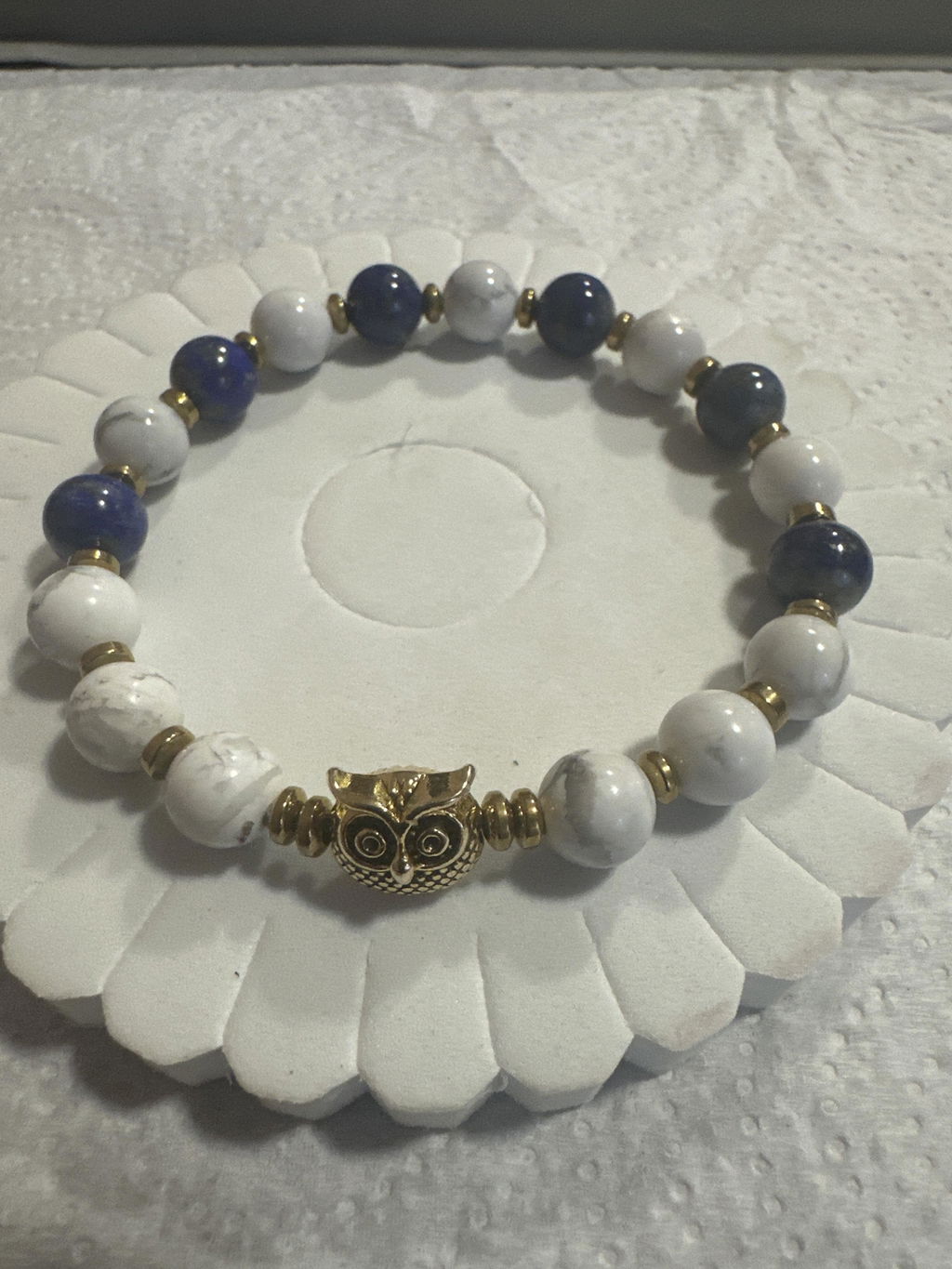
Ces perles sont incroyables. Très belle couleur et une brillance discrète. Parfaiit pour mes créations. Belle qualité !!
How to identify a genuine Rhodochrosite
Characteristics of Genuine Rhodochrosite
- Color: Authentic Rhodochrosite is primarily distinguished by its pink to rose-red hues, sometimes banded with white or cream. These natural shades result from the presence of manganese in its chemical composition. Genuine Rhodochrosite often features a soft, even gradient without the colors being uniform or overly bright. The intensity varies depending on the geographical location, but it always retains this warm, nuanced palette, distinct from the overly saturated or monotonous artificial shades found in imitations.
- Texture: This stone has a waxy or slightly glassy texture to the touch when polished. In its rough form, it may have a more granular or botryoidal surface, with characteristic rounded shapes. Its structure is often visible in fine bands or concentric layers. Genuine Rhodochrosite does not display air bubbles or irregularities typical of synthetic materials. The stone is also fragile when subjected to severe impacts, revealing a natural rather than artificial appearance.
- Hardness: With a hardness between 3.5 and 4 on the Mohs scale, Rhodochrosite is relatively soft compared to other minerals commonly used in jewelry. This property influences its use and how it is presented in the professional trade. The stone cannot be easily scratched with a fingernail or a coin, but it can be scratched by a sharp metal object or harder crystals such as quartz. This moderate hardness is a reliable indicator for distinguishing Rhodochrosite from harder or artificial imitations.
Common Imitations
- Tinted glass: A common imitation comes from colored glass, which can reproduce the pink hues of Rhodochrosite but often lacks depth and natural color variation. This glass has liquid-like or overly shiny reflections, with internal bubbles or fusion irregularities visible under raking light. Furthermore, its density is lower than that of natural stone, which can be detected by a professional when handled. Tinted glass does not chip as easily and lacks the stratification characteristic of Rhodochrosite.
- Resin: Resin or plastic imitations are lightweight and often overly smooth and shiny, lacking the characteristic natural texture. This material is more resistant to scratches and does not react the same way to impacts or heat. Tinted resin can appear too uniform, without natural inclusions or graded color layers. Its flexibility, although slight, allows this fake Rhodochrosite to be identified through simple tests or expert tactile experience.
- Dyed stones: Certain stones such as calcite or whitish quartz are artificially colored to imitate Rhodochrosite. These dyed stones display irregularities in color distribution, which is often concentrated on the surface rather than throughout the stone. The dye may fade over time or during cleaning, revealing the mineral's true nature. This deceptive technique requires an experienced eye and sometimes more advanced analysis to determine the true composition.
Simple Tests
- Observation: The first step is to examine the stone in natural light. Genuine Rhodochrosite shows a layered or banded texture with subtle hues and a soft, not overly shiny, luster. Under a magnifying glass or microscope, the absence of bubbles, glass shards, or irregularities typical of imitations is an important distinguishing sign. Natural wear on the edges should also be checked, as synthetic pieces often appear new or too perfect.
- Touch: To the touch, genuine Rhodochrosite feels cool and slightly waxy. Its density, perceptible by hand, is higher than that of plastic or resin materials. The texture is never perfectly smooth or cold like polished glass, which is an interesting point for a professional. A slight, soft roughness to the touch is normal, especially on cut or rough pieces.
- Translucency: Genuine Rhodochrosite has variable translucency depending on its thickness, generally appearing more transparent at the thin edges. A simple test involves shining a pointed light source, such as an LED lamp, through the stone. If the light passes through too uniformly without variation, or if the stone appears abnormally opaque, an imitation should be suspected. This quick, non-destructive test helps distinguish high-quality natural Rhodochrosite from fake specimens.
Benefits for Professionals
For resellers, specialty shops, jewelry designers, and therapists, correctly identifying genuine Rhodochrosite is essential to guarantee quality and customer satisfaction. Offering authentic stones builds trust and customer loyalty while minimizing returns related to questionable products. This trust also allows for fair pricing by highlighting the stone's origin and natural properties. For designers, the origin and natural appearance strongly influence the artistic value of the pieces, enhancing their reputation. In lithotherapy, offering authentic content helps maintain professional credibility while meeting the expectations of an informed audience sensitive to detail. Mastering authentication criteria prevents disputes and supports an ethical position in a competitive market.
Wholesale Rhodochrosite Orders
Acquiring Rhodochrosite wholesale requires handling solid, certified lots from reliable sources. Professionals must ensure that the delivered stones meet the authenticity criteria described above, in terms of color, texture, and hardness. Bulk supply guarantees consistent quality and allows the range to be adapted to the specific needs of end customers. Whether for jewelry, lithotherapy, or decoration, partnering with specialized suppliers makes it easier to select natural stones that are both aesthetically pleasing and compliant. This approach reduces the risks associated with counterfeits, optimizes margins, and promotes sustainable business growth. To discover a rigorously controlled professional range, we invite you to view our Rhodochrosite – Professional Collection.
Lithotherapy information is based on tradition and does not constitute medical advice.