Natural Turquoise Wholesale – Supplier for Professionals
Turquoise is one of the most recognizable natural stones in the world. Its intense blue color, sometimes mixed with green hues and dark mineral networks, makes it an immediately identifiable gem that is particularly appreciated in the worlds of jewelry, mineralogy, and lithotherapy. For millennia, this stone has fascinated human civilizations, which have used it both as a precious ornament and as a spiritual or protective symbol. Even today, Turquoise holds an important place in mineral collections and specialty shops.
At Minéraux d’Ailleurs, we put our expertise at the service of professionals wishing to offer authentic, carefully selected natural stones. Our company acts as a wholesaler specializing in natural minerals and serves resellers, esoteric shops, jewelers, lithotherapy practitioners, jewelry designers, and wellness professionals exclusively. Thanks to an international partner network and a rigorous selection process, we offer high-quality natural Turquoise tailored to the needs of the professional market.
Our catalog includes a wide variety of Turquoise products: tumbled stones, beads for jewelry making, cabochons, bracelets, pendants, decorative objects, or mineral pieces intended for collections. Each lot is selected according to precise criteria of color, appearance, origin, and uniformity to ensure consistent quality for professionals. This commitment allows our partners to offer their customers authentic, aesthetic pieces that meet the expectations of the natural stone market.
As a supplier for professionals, our goal is simple: to offer a reliable supply of natural Turquoise while ensuring transparency, traceability, and quality. This approach allows shops and designers to develop their business around an iconic stone, appreciated for its beauty and strong symbolic value.
What is Turquoise?
Turquoise is a mineral belonging to the family of hydrated copper and aluminum phosphates. It generally forms in arid environments where the weathering of copper-rich rocks allows this mineral with its characteristic colors to crystallize. Its chemical composition can be expressed by the formula CuAl6(PO4)4(OH)8·4H2O. This structure gives the stone its iconic blue hue as well as its often slightly porous texture.
Unlike many transparent gemstones, Turquoise is generally opaque. It appears in the form of nodules, veins, or compact masses integrated into the host rock. Its luster is often described as waxy to matte, although polishing can reveal a smooth and luminous surface that is particularly appreciated in jewelry making.
Turquoise has been used by humans for thousands of years. Traces of its use have been found in many ancient civilizations, notably in the Middle East, Central Asia, Egypt, and among Native American cultures. It was already exploited in antiquity for the manufacture of ornaments, talismans, and ritual objects.
Its name comes from the word "turquoise," which means "stone of Turkey," because it once arrived in Europe via trade routes passing through the Ottoman Empire. However, the majority of historical deposits are actually located in Iran, a region that has long supplied some of the most renowned Turquoise in the world.
Today, Turquoise remains a highly sought-after stone in the natural mineral trade. Its unique color, rich history, and strong symbolism make it an essential stone for professionals in lithotherapy, artisanal jewelry, and specialty shops.
Characteristics and Varieties of Turquoise
Turquoise is distinguished above all by its remarkable color palette. Its most famous shade is intense turquoise blue, often described as a bright sky blue. However, the stone can display a great diversity of shades ranging from very light blue to deep blue, as well as from blue-green to pronounced green. These variations depend directly on the chemical composition of the stone and the elements present during its formation.
The dominant presence of copper generally favors characteristic blue hues. When iron is involved in the composition, the stone can shift toward greener shades. In some cases, traces of zinc can also slightly alter the color and produce lighter or softer tones.
Another iconic visual element of Turquoise is the presence of mineral matrices. These networks of dark veins appear as brown, black, or golden lines running through the stone. These patterns are often called "spider web" due to their appearance resembling a spider web. Some matrices are very fine and delicate, while others form bold designs that give each stone a unique character.
In the field of gemmology and jewelry, some Turquoises are particularly sought after for their uniform color without visible matrix. Others, on the contrary, are appreciated for their complex natural patterns that bear witness to their geological formation.
Turquoise has a relatively moderate hardness on the Mohs scale, generally between 5 and 6. This characteristic explains why it must be handled and worked with care during cutting or polishing. Its structure can also be slightly porous, making it sensitive to chemicals or significant variations in humidity.
Despite this relative fragility, Turquoise remains a highly used stone in jewelry and decoration. Its natural appearance, varied patterns, and soothing colors make it a particularly attractive gem for mineral enthusiasts and industry professionals.
Origin and Geology of Turquoise
The formation of Turquoise is linked to specific geological processes that occur mainly in arid or semi-desert environments. In these regions, copper-laden waters flow slowly through rocks rich in aluminum and phosphorus. Over time, these elements combine and crystallize to form Turquoise in the fissures or cavities of the rock.
This formation process can span thousands, or even millions, of years. Climatic conditions play an essential role, as an overly humid environment would prevent the stabilization of the mineral. This is why most Turquoise deposits are located in desert or mountainous areas.
Among the best-known regions for Turquoise production are the United States, notably in the states of Nevada, Arizona, and New Mexico. Turquoises from these regions are particularly appreciated for their pronounced matrices and intense colors. Some historic American mines are highly sought after by collectors today.
Iran is also famous for its historical deposits, notably around the Nishapur region. Iranian Turquoise is often renowned for its deep, uniform blue, considered one of the most beautiful in the world.
Other important deposits are found in China, Tibet, Egypt, and Mexico. Each origin produces Turquoises displaying slightly different visual characteristics depending on the local geological composition.
At Minéraux d’Ailleurs, particular attention is paid to the origin of the stones. We favor responsible supply chains and work with partners capable of guaranteeing extraction that respects natural resources and human conditions. This approach allows us to offer professionals natural Turquoise whose traceability and quality are clearly identified.
The Different Forms of Turquoise Offered to Professionals
In the natural mineral trade, Turquoise can be offered in many forms to meet the varied needs of professionals. Specialty shops, jewelry designers, and lithotherapy practitioners often seek different formats depending on their uses.
Tumbled Turquoise stones are among the most popular formats. Their polished surface highlights the natural nuances of the stone and any matrix patterns. These pieces are often offered individually or in lots for retail resale, energy practices, or the creation of mineral collections.
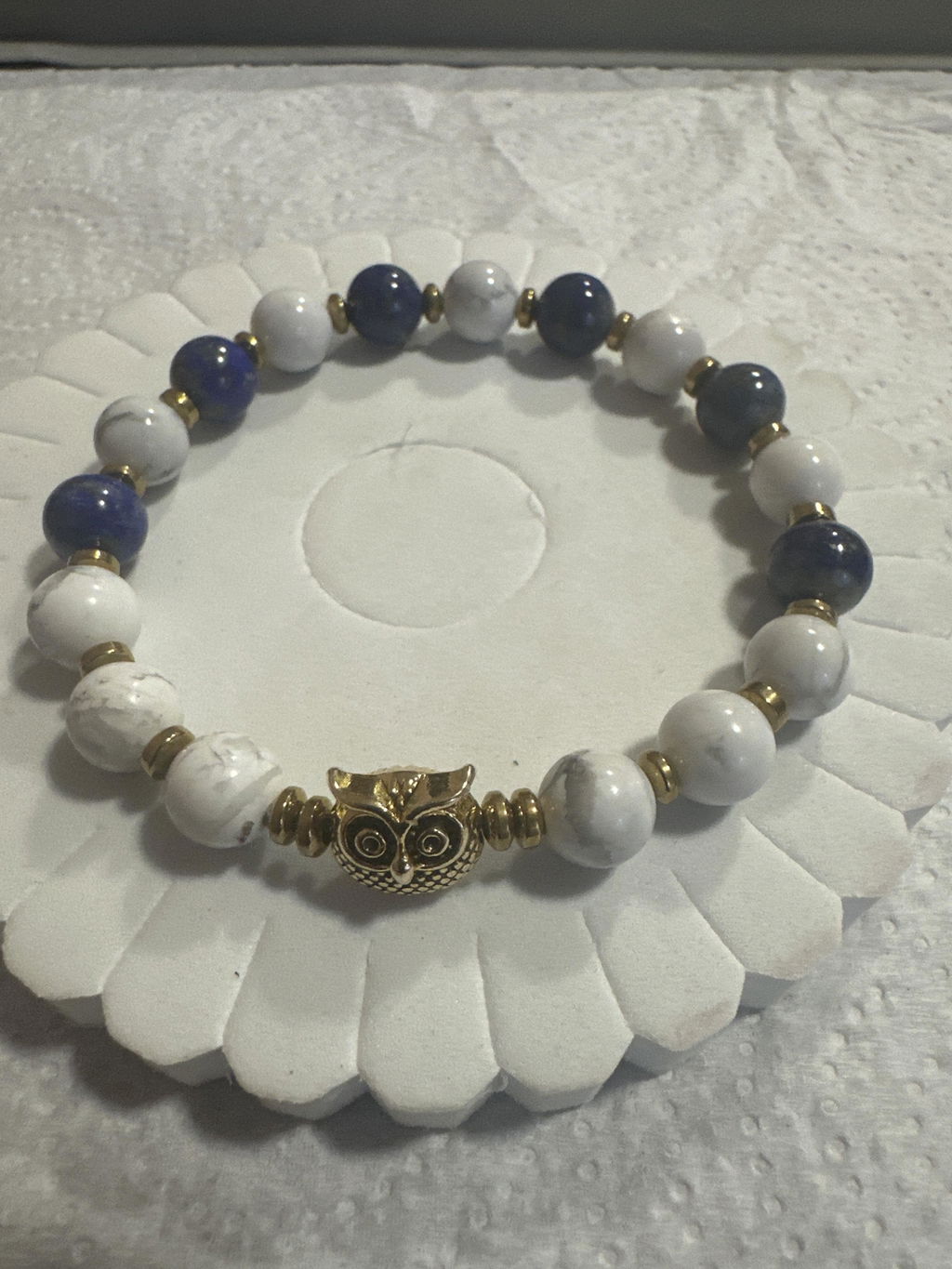
Turquoise beads are particularly appreciated by artisanal jewelry designers. They allow for the creation of necklaces, bracelets, or earrings that highlight the unique color of this stone. Strands of beads offer a practical solution for professionals wishing to design their own creations.
Cabochons are also a highly sought-after format. Cut and polished on one side, they are designed to be set in rings, pendants, or brooches. Their smooth surface highlights the natural patterns and color variations of Turquoise.
In some shops, Turquoise is also offered in the form of decorative objects or collectible pieces. One can thus find polished pebbles, plaques, sculptures, or even elements intended for interior decoration or meditation spaces.
Thanks to this diversity of formats, Turquoise easily adapts to different commercial worlds: artisanal jewelry, esoteric shops, mineral stores, or spaces dedicated to wellness. This versatility explains why it remains a highly demanded stone on the professional market.
Turquoise in Lithotherapy and Traditions
Since antiquity, Turquoise has been associated with many beliefs and spiritual traditions. Several ancient civilizations attributed a protective and sacred dimension to it. In some Native American cultures, it was considered a stone connecting heaven and earth, a symbol of balance and harmony.
In ancient Egypt, Turquoise adorned jewelry and ritual objects. It was associated with protection and spiritual rebirth. In some Asian traditions, it symbolizes luck, prosperity, and wisdom.
In the field of contemporary lithotherapy, Turquoise is often associated with communication and personal expression. Some practitioners believe that it could promote more authentic dialogue and help express emotions clearly. It is also sometimes linked to emotional soothing and inner harmony.
Turquoise is traditionally associated with the throat chakra, the energy center linked to speech and self-expression. In this context, it is sometimes used during meditation or personal development practices.
Symbolically, Turquoise is also considered a protection stone for travelers and people seeking inner transformation. Its color, evoking the sky and water, gives it a soothing and inspiring dimension.
Lithotherapy information is based on traditions and does not constitute medical advice.
Why Offer Turquoise in Your Shop?
Turquoise has many assets that make it a particularly interesting stone for professionals in the mineral and jewelry sector. Its unique color is immediately recognizable by customers, which facilitates its display in a showcase or presentation.
In specialty lithotherapy shops, Turquoise is one of the best-known stones to the general public. Its symbolism linked to communication, protection, and inner balance attracts a varied clientele, ranging from mineral enthusiasts to people interested in personal development.
In the jewelry field, Turquoise is also highly appreciated for its distinctive aesthetic. It fits equally well into contemporary creations as well as more ethnic or traditional styles. Artisans can easily combine it with silver, copper, or other natural materials to create unique pieces.
Its diversity of shades and patterns also allows for a wide range of products to be offered, from simple pieces to rarer stones intended for collectors. This variety constitutes an important commercial advantage for shops wishing to enrich their natural stone offering.
The lasting popularity of Turquoise also contributes to its stability on the market. Unlike some more niche stones, it benefits from international recognition and constant appeal among consumers.
Your Natural Turquoise Wholesaler
Minéraux d’Ailleurs supports professionals in their supply of natural Turquoise thanks to a rigorous selection and a network of partners specializing in the extraction and processing of minerals. Our goal is to offer authentic stones that meet the requirements of the professional market.
Each lot of Turquoise is inspected to ensure consistency in terms of quality, color, and finish. The stones are sorted and prepared to facilitate their integration into shop collections, artisanal creations, or wellness-related practices.
Our position as a wholesaler allows us to offer conditions adapted to professionals, with calibrated lots, regularly renewed stock, and reliable logistics. This organization allows resellers to maintain a stable offering throughout the year.
Beyond simply supplying natural stones, we also put our expertise at the service of our partners. Our team supports professionals in the choice of products, understanding the different qualities of Turquoise, and selecting the formats best suited to their activity.
Working with Minéraux d’Ailleurs means benefiting from a partner specializing in natural minerals, committed to a process of quality, transparency, and respect for resources.
Guides on Turquoise
Discover our strands of Turquoise beads and bracelets: