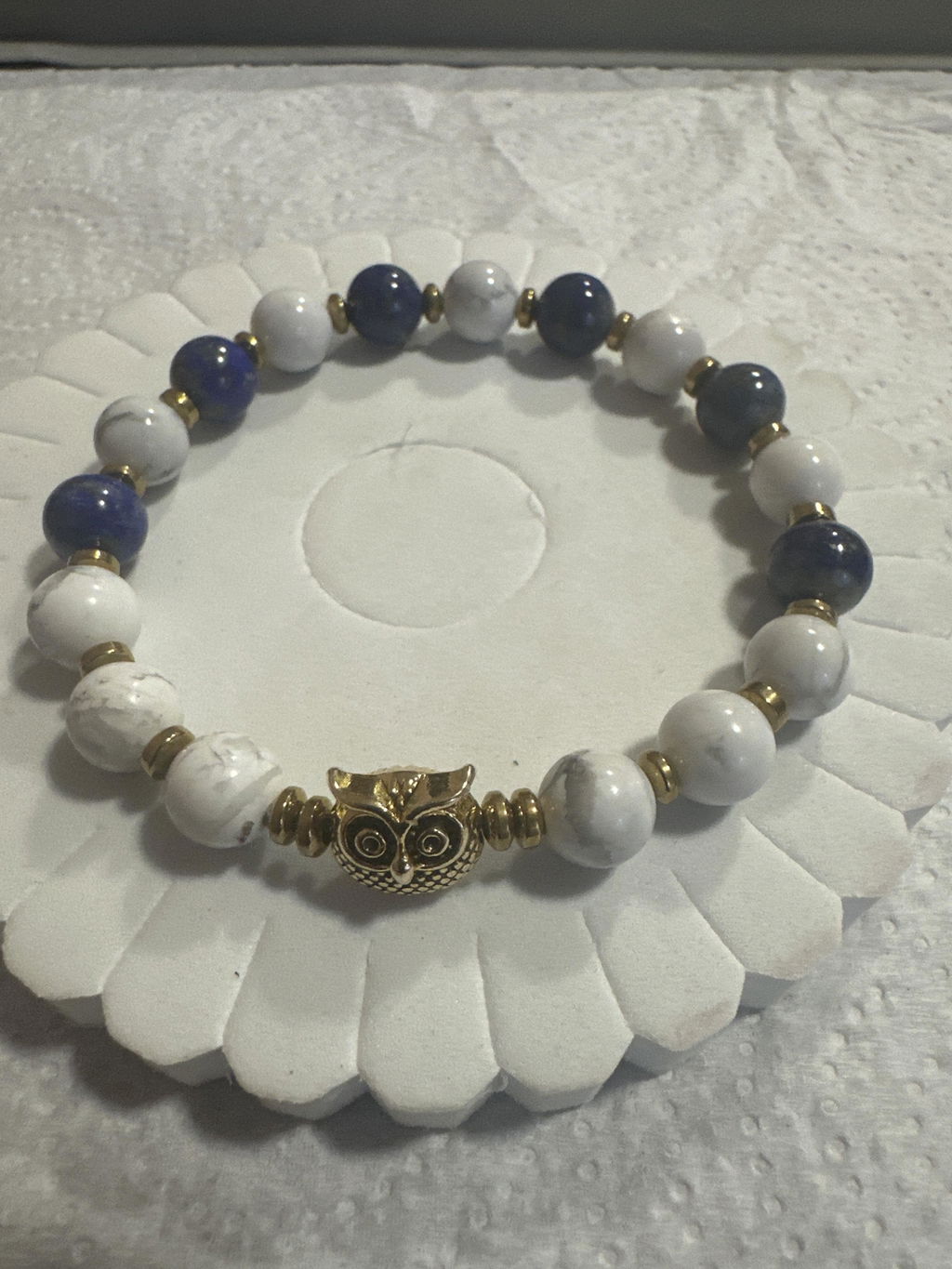
Ces perles sont incroyables. Très belle couleur et une brillance discrète. Parfaiit pour mes créations. Belle qualité !!
How to identify a genuine Pietersite
Characteristics of Genuine Pietersite
- Color: Authentic Pietersite features a unique palette dominated by deep, warm tones, ranging from golden brown to ochre, with hints of blue and copper. These vibrant colors result from the presence of altered crocidolite, giving the mineral an exceptional chatoyant luster. Unlike imitations, genuine Pietersite displays an iridescent appearance that seems to change with the angle of light, with distinct swirling veins. This chromatic uniqueness is essential to observe during identification.
- Texture: The texture of genuine Pietersite is characterized by its silky, smooth polished surface, highlighting fibrous inclusions from which this "chatoyant" effect, also known as hawk's eye, originates. These fibers create the impression of internal, almost liquid movement, giving the stone an unusual visual dynamism. The structure is never grainy or uniform, but always marked by these interwoven filaments, clearly distinguishing the real stone from synthetic reproductions or crude imitations.
- Hardness: Pietersite has a hardness of 6.5 to 7 on the Mohs scale, giving the stone good resistance to wear and scratches. This factor is key during authentication, as artificial materials or resins imitating Pietersite often have a significantly lower hardness and scratch easily. Testing the stone with a simple test, in a professional and careful setting, helps certify its genuine nature, especially when faced with counterfeits that do not meet this criterion.
Common Imitations
- Tinted glass: Tinted glass is a common imitation used to reproduce the vibrancy and reflections of Pietersite. However, it lacks the depth and characteristic fiber play of the natural stone. Under intense light or close inspection, the glass often reveals bubbles or a surface that is too smooth and uniform, a sign of industrial manufacturing. Furthermore, its weight and temperature to the touch differ significantly from genuine Pietersite, which can alert an experienced professional.
- Resin: Resin copies are sometimes mistaken for Pietersite due to their ability to imitate chatoyant colors. However, resin has a plastic texture, with an artificial smoothness and a certain flexibility absent in natural stone. To the touch, the authentic stone is cooler and heavier. Furthermore, resin can yellow over time, which does not happen with genuine Pietersite, an important factor for the product's lifespan in a shop or collection.
- Dyed stones: Some semi-precious stones are artificially colored to imitate the shades of Pietersite. These dyed stones nevertheless lack the characteristic fibers, and the color may appear uniform or overly bright. Under natural light, irregular variations in hue can be perceived, which may be an indication of dyeing. Knowing the stones often used for these dyes as well as their physical properties allows the professional to better control their origin and authenticity.
Simple Tests
- Observation: The first step is to examine the stone with a magnifying glass or under diffused natural light. Genuine Pietersite displays visual complexity through its chatoyant effect and fibrous inclusions that form irregular patterns, almost like a natural drawing. Any appearance that is too perfect, uniform, or plastic should raise suspicions. Also observe the polished edges, which should be clean without excessive signs of artificial wear, a sign of professional quality.
- Touch: To the touch, genuine Pietersite gives a sensation of coolness and density related to its mineral nature. It is heavier than plastic or glass imitations. The polished texture should be smooth without any perceptible roughness. A slight movement in the hand also allows for the detection of the internal play of light, which produces an effect of depth and movement impossible to achieve in copies. This simple test is accessible even outside the laboratory, through careful handling.
- Translucency: Pietersite is opaque, with slight translucency only on the thinnest parts or thin slices. Passing the stone over a light source allows you to check this criterion, which is often absent in excessively dyed stones. Translucency that is too pronounced, or an appearance that is too opaque and matte, is likely to reveal a false origin. This visual test is an effective complement to quickly validate a piece before investing further in in-depth analyses.
Interest for Professionals
For resellers, specialty shops, creators, and therapists, ensuring the quality and authenticity of Pietersite is a major challenge. This stone, appreciated for its aesthetics and symbolic properties, requires strict control at the time of purchase to avoid any dispute or customer dissatisfaction. By incorporating clear authentication criteria, professionals strengthen their credibility and expertise in a market where imitations are frequent. An in-depth knowledge of the physical, visual, and tactile characteristics of Pietersite allows them to offer products that meet the expectations of demanding customers, while optimizing supplier selection.
Furthermore, genuine Pietersite, due to its rarity and uniqueness, enjoys undeniable added value in the context of professional commercialization. Investing in guaranteed pieces also ensures better customer loyalty and opens the door to lasting collaborations with serious partners. Expertise in the field of authentication, combined with clear communication with the end customer, builds the professional's reputation as a recognized specialist in the exceptional mineral sector.
Wholesale Pietersite Orders
To meet the specific demands of the professional market, it is essential to have access to a rigorous and varied selection of Pietersite available for wholesale. This approach allows resellers, specialty shops, and creators to acquire qualified lots that meet authenticity and quality criteria. Working with experienced suppliers guarantees transparent sourcing and personalized support, facilitating the integration of this stone into carefully curated collections. Wholesale purchasing also optimizes inventory management and offers pricing conditions adapted to B2B requirements.
By focusing on the impeccable quality of the stones and traceability, these professional collections allow the final customer to be offered distinguished, reliable, and valuable products. Access to a diversified range, from cabochons to carefully selected raw pieces, meets all business needs. This structuring of the offer ensures market differentiation and an upgrade of commercial proposals.
Lithotherapy information is based on traditions and does not constitute medical advice.