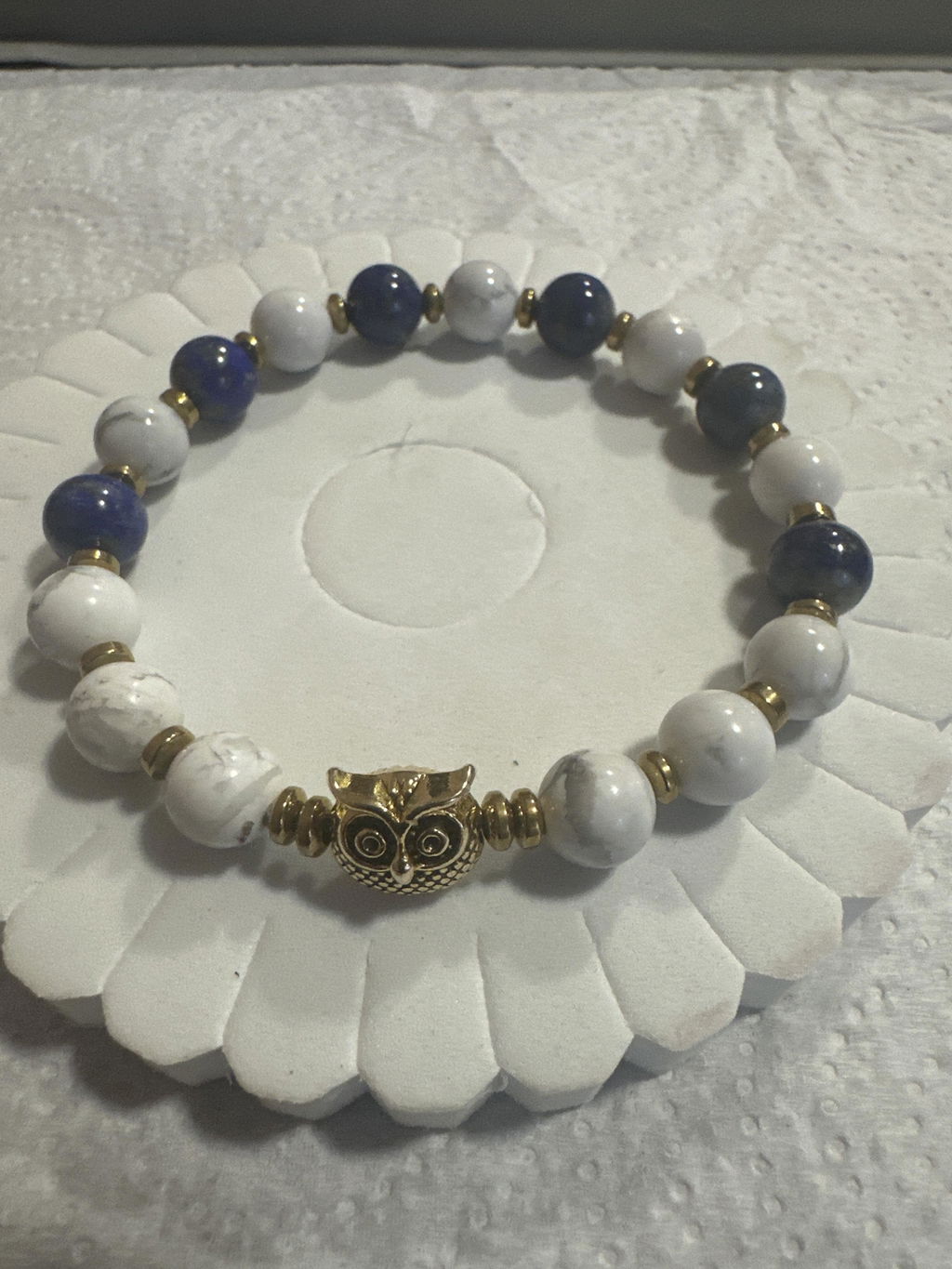
Ces perles sont incroyables. Très belle couleur et une brillance discrète. Parfaiit pour mes créations. Belle qualité !!
How to identify genuine chalcedony
Characteristics of Genuine Chalcedony
- Color: Chalcedony is known for its soft and delicate hues, mainly in shades of light blue, gray, milky white, and sometimes greenish or brownish tones. Its color is generally uniform but may show subtle variations, with bands or cloudy patterns that reflect its natural formation. Genuine chalcedony should not appear completely opaque or overly shiny, and its colors remain understated and soothing, unlike imitations that are often too bright or artificial.
- Texture: To the naked eye and touch, the surface of chalcedony is matte to slightly satiny, with a fine texture and smooth finish. It does not have an overly shiny or plastic appearance. Its grain is very fine, almost waxy, which distinguishes it from synthetic or counterfeit materials. The stone is comfortable to hold, with a soft, non-rough appearance that is a sign of its natural quality.
- Hardness: Chalcedony belongs to the quartz family, with a hardness of approximately 6.5 to 7 on the Mohs scale. This property is essential to consider when assessing its authenticity. Genuine chalcedony resists scratches from most metals but can be scratched by harder materials such as diamond. This moderate toughness confirms its mineral origin and clearly distinguishes it from imitations that are often more fragile or softer.
Common Imitations
- Tinted glass: Colored glass is a common counterfeit, often used to offer an affordable alternative to chalcedony. This fake has a more intense, almost "mirror-like" shine, and its surface is often too smooth and cold to the touch. Furthermore, tinted glass may contain internal air bubbles or be perfectly uniform, which is rare in natural chalcedony. It lacks the velvety texture and depth of genuine stones.
- Resin: Colored resin is frequently used to create objects that resemble chalcedony, particularly in the craft or decorative industries. This imitation is distinguished by its excessive lightness and lack of true mineral density. To the touch, resin is often warm and smooth, sometimes sticky. It can also be overly shiny or show small molding defects that are not found in natural stone.
- Dyed stones: Some less valuable stones are artificially dyed to imitate chalcedony, particularly calcite or even common quartz. These dyed stones become unstable over time, and their color may fade or become uneven. Visually, they often lack the chromatic subtlety characteristic of chalcedony, with hues that are sometimes too bright or uniform and an absence of characteristic cloudy nuances.
Simple Tests
- Observation: Careful observation in natural light is a key first test. Genuine chalcedony reveals more or less translucent areas with a subtle sense of depth. The patterns are never perfectly symmetrical or uniform. Looking for natural inclusions, bands, and gradients is essential. Using a magnifying glass can help identify the absence of bubbles, a typical sign of glass, and detect the internal texture characteristic of the stone.
- Touch: Physical contact allows you to assess the density and thermal sensation. Authentic chalcedony feels cold to the touch and then slowly warms in the hands. It is also quite heavy for its size, unlike resin or plastic imitations. The touch reveals a certain soft roughness that is neither plastic nor overly smooth, characteristic of its fine, compact mineral structure.
- Translucency: When placed in front of a moderate light source, chalcedony shows slight translucency, with a diffused but perceptible passage of light. This property is difficult for synthetic materials to reproduce. Glass imitations may be too transparent or, conversely, too opaque, while genuine stone offers a natural balance, with the light appearing to "vibrate" within the material.
Benefits for Professionals
For resellers, specialty stores, or designers, mastering chalcedony authentication is an essential asset, both to guarantee product quality and to maintain customer trust. Offering genuinely natural stones in a B2B context relies on an in-depth knowledge of their physical and aesthetic characteristics. Selling authentic chalcedony enhances expertise and strengthens professional reputation by offering a carefully verified selection.
Furthermore, recognizing imitations helps avoid disputes and customer returns, which cause costs and bad publicity. For therapists, ensuring the purity of the stone is essential for credibility in lithotherapy practice and consultation. Finally, profit margins can be optimized by incorporating quality-controlled batches and highlighting this transparency to business partners. Technical expertise and rigor in assessment are thus fundamental drivers for a sustainable business in the professional market.
Wholesale Chalcedony Orders
For professionals wishing to enhance their offering with a curated selection of chalcedony, it is essential to work with specialized suppliers who guarantee the natural origin and authenticity of the stones. Wholesale ordering allows you to benefit from preferential rates as well as personalized guidance in choosing the sizes, shapes, and hues suited to your specific needs, whether for jewelry, decorative objects, or therapeutic applications.
Having a professional range with certified stones makes it easier to retain demanding customers by highlighting the quality and traceability of the product. These advantages help build a consistent and distinctive offering in a competitive market. To access a complete and carefully selected range, visit our Chalcedony – Professional Collection, which includes various shapes and qualities suited to diverse professional needs.
Lithotherapy information is based on traditions and does not constitute medical advice.